Newsletter

Banking While Undocumented: Where and How to Start

Being an undocumented immigrant is challenging when trying to secure financial wellness. Having a bank account provides numerous opportunities for economic security, including storing your money in a safe place, providing proof of income to secure housing, and protecting your money against fraud.1 Unfortunately, many immigrants miss out on the opportunity of having a bank account due to fear and a lack of information. As many banks ask for proof of citizenship, such as a Social Security number, undocumented students are afraid that opening a bank account could possibly put their and their family’s status in jeopardy. They may also not be aware of the steps to opening a bank account, making the process of understanding one’s eligibility more complicated. To ensure that undocumented immigrants’ status remains protected, some banks do not require proof of citizenship documentation to open a bank account.3 To alleviate undocumented students’ fears and make the process of opening a bank account accessible to undocumented individuals, this article will provide a step-by-step guide on how to apply for a bank account in the United States of America. 


Step 1: Researching Banks that Accept Undocumented Immigrants                     Before applying for a bank account, it’s important to look into which banks don't need proof of citizenship documentation. Within the United States, there are over twenty-five banks and credit unions that make it easier for immigrants to apply for a bank account. These banks include Bank of America, Wells Fargo, and more. As these banks are large franchises, there are thousands of locations across the United States, making banking largely accessible for anyone, regardless of location. Although these banks don’t require documentation for one’s citizenship status, they may require other forms of documentation to create a bank account.5 


Step 2: Understand What Documents the Bank You Want to Apply to Needs 

Depending on the bank you’re applying to, they require different forms of identification to open a bank account. Some of these identifications may include an ID from the country you were born in, a foreign passport, a foreign driver's license, or a foreign visa.2 You can also use an Individual Taxpayer Identification Number.6 To apply for an Individual Taxpayer Identification Number, used to process taxes and apply for a bank account, you must have a green card or have been in the United States for more than 183 days. If an undocumented person doesn’t meet these qualifications, they can apply for one if they are on another person’s tax form, such as if you have a spouse or are a dependent.7 You have to get an Individual Taxpayer Identification Number only if you are expected to file taxes. When applying for one, fill out the W-7 form provided by your job or other tax filing forms, submit proof of identity, and mail or take your completed forms to an IRS office. In addition to having a proof of identification to open a bank account, some banks may require a proof of address. Proof of address includes providing a utility bill sent to your place of residence or a lease.8 


Step 3: Know What Type of Bank Account You Can Have 

There are different kinds of bank accounts you can open, the most common being a checking account or a savings account. A checking account is the account where you’ll manage your everyday income. Checking accounts provide a safe place to store your everyday spending money, withdraw cash, and write your checks. Depending on the bank chosen, checking accounts usually have an online service platform, allowing you to view your accounts, pay your credit card, etc. A savings account is where you can store the money you don’t want to spend every day. Some savings account make you have a minimum balance at all times, ensuring that the account remains active. Depending on the amount of money in a savings account and the interest rate offered, your balance can increase over time. This allows you to save money for larger payments or emergency funds, while also making more money.10 The bank account that people get regardless is a checking account, but having both can provide you with more ways to manage your money. 


 Step 4: Apply in Person 

Once you have gathered the documents necessary to open a bank account, check if your bank requires an appointment or accepts walks in. Once you set an appointment or decide to walk in, go to the bank of your choice and talk to a worker. While at the bank, ask any additional questions you have and a request translator, if needed. 3.2 The worker will review your documents and assist you in setting up your bank account. Once they have helped you set up the bank accounts of your choice, you are now ready to start investing and spending your money safely. 

Opening a bank account while undocumented can seem scary and complicated. Yet, securing financial security while undocumented is possible. Through researching nearby banks, Wells Fargo and Bank of America in the Bay Area, that allow alternative documentation from social security numbers, gathering the required documents needed, looking into different types of bank accounts, and applying in person, you’re closer to obtaining more financial wellness opportunities. To obtain an Individual Taxpayer Identification Number go to your nearest IRS office with your completed W-7 form, the closest being located at 450 Golden Gate Ave, San Francisco, CA 94102. Having a bank account allows undocumented immigrants to gain access to a safe place they can store money, make online payments easier, and protect themselves from fraud. Therefore, allowing undocumented immigrants to secure financial wellness despite their citizenship status. 

References 

1. Federal Deposit Insurance Corporation. Top Reasons to #GetBanked. Fdic.gov.  

Accessed October 7, 2025.  

https://www.fdic.gov/getbanked/pdf/top-reasons-to-open-a-bank-account.pdf 

2. CTI Team. Bank Teller Job Description. Corporate Finance Institute. Accessed October 8,  

2025. https://corporatefinanceinstitute.com/resources/career/bank-teller-job-description/ 

3. Ferri MC. How to Open a Bank Account as an Undocumented Immigrant.  

immigrantfinance.com. Published February 12, 2024. Accessed October 9, 2025.  

https://cpanel.immigrantfinance.com/how-to-open-a-bank-account-as-an-undocumented-immigrant/ 

4. Bank of America In Fortune Rankings. fortune.com. Published October 9, 2025.  

https://fortune.com/company/bank-of-america-corp/ 

5. InterCultural Voices. 28 Banks And Credit Unions That Make It Easy For Immigrants And  

Non-US Citizens To Open Accounts. Interculturalvoices.com. Published November 22, 2023. Accessed October 9, 2025.  

https://weare.interculturalvoices.com/blog-business-leadership/28-banks-and-credit-unions-that-make-it-easy-for-immigrants-and-non-us-citizens-to-open-accounts 

6. Ferri MC. Immigrants Can Safely Open Bank and Investment Accounts.  

Immigrantfinance.com. Published March 3, 2025. Accessed October 9, 2025.  

https://webmail.immigrantfinance.com/immigrants-can-safely-open-bank-and-investment-accounts-heres-why-you-should/ 

7. Individual taxpayer identification number (ITIN). Irs.gov. Published 2017. Accessed October  

9, 2025. https://www.irs.gov/tin/itin/individual-taxpayer-identification-number-itin#benefits 

8. Sheehy K. How Undocumented Immigrants Can Get Bank Accounts. nerdwallet.com.  
Published  

January 25, 2024. https://www.nerdwallet.com/article/banking/undocumented-immigrants-bank-accounts 

9. U.S Copyright Office. Recordation Overview. Copyright.gov. Published 2025. Accessed  

October 9, 2025. https://www.copyright.gov/recordation/ 

10. TD Bank. What Are Common Types of Bank Accounts? td.com. Accessed October 9, 2025.  

https://www.td.com/us/en/personal-banking/learning/types-of-bank-accounts 

11. Digital Tools to Help Financial Institutions Improve Customer Service, Operations.  

claconnect.com. Published December 10, 2024. Accessed October 9, 2025. https://godigital.claconnect.com/insights/article/digital-tools-to-help-financial-institutions-improve-service/ 
Spotlight on Free & Low-Cost Grocery Programs

Do you find that grocery prices are just too high? Are you in search of free and low-cost grocery programs? Read this article to learn more about food resources available in San Francisco at little or no cost to you!


In San Francisco, there are several different types of food/grocery programs; and they vary on what they provide. During the COVID shelter-in-place and quarantine period, many food programs responded to an increased demand of food services due to a variety of reasons (such as decreased access to markets, financial strains due to lay-offs, health concerns, etc.).1,2 Since then, many programs have experienced a decrease in funding; and, consequently, they have had to reduce their resource availability. Fortunately, there are still active programs, and in this article, you’ll find a variety of food resources that are still serving individuals and families. See below for more information on Free Grocery Stores, Free Food Pantries, and Free Hot Meals.


Free Grocery Stores

You can find Free Grocery Stores that invite individuals and families to “shop” in a grocery store as you would in any other market, but at no cost to the shopper. This option allows individuals and families to make the decision on what they would like to receive from a food program, and it allows them to pick the groceries they prefer to consume. The District 10 (D10) Community Market is San Francisco’s first-ever government-funded free grocery store located in the Bayview neighborhood, and they are committed to providing a free grocery market experience for those experiencing hunger that is centered in dignity, culture, and nutrition.3 To be eligible for this resource, you must be a resident of 94124, 94107, or 94134 that receives public assistance (including programs such as CalFresh, Medi-Cal, CalWORKs) or is otherwise low-income (as defined by earning less than 300% of the Federal Poverty Level), and have children in the household or have a diet-related illness.4 To get connected to the D10 Community Market, you need to be referred by a community organization in the Market’s referral network [such as Community Youth Center, Bayview YMCA, Community Awareness Resource Entity (C.A.R.E.), Samoan Community Development Center (SCDC), and more]; a full list can be found on their website linked at the bottom of this article.5 

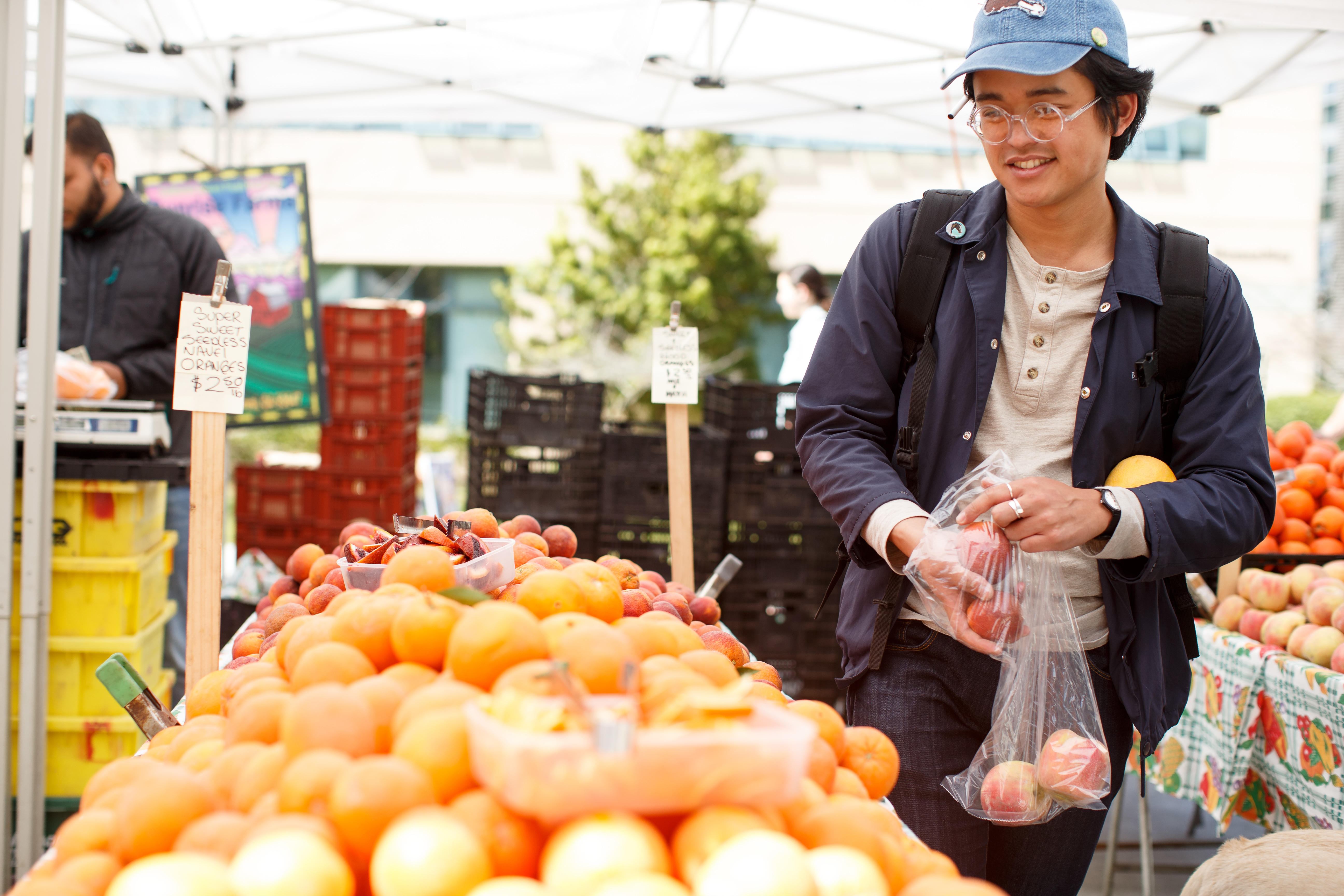
Figure 1. Farmer's Market 1 Person Looking at Oranges12

Student at on-campus farmer's market

Free Food Pantries

Another source of free groceries that can be accessed in different areas of San Francisco, and other cities as well, are food pantries (also called food banks, food distributions, food closets, etc.). Typically, you can find an assortment of groceries at a food pantry ranging from dairy products to meat products to canned goods. The style of distribution varies from pantry to pantry: some places give out pre-selected boxes of food, some allow participants to select from their available stock, some are drive-thru only, and so on. When deciding if a food pantry may be a good fit for you, take note of their distribution style and if there’s any special requirements geared towards a specific group that they serve (families with children, seniors, low-income individuals, etc.). Always confirm eligibility requirements directly with the food pantry by checking their website or contacting them. 


SFSU On-Campus Food Pantry:

  • Associated Students Food Pantry & Gator Groceries is an emergency food program open Monday-Thursday for students to pick up free food at the bottom floor of the Cesar Chavez Student Center! Students can select from the pantry’s available stock, and they kindly ask that students bring their own bags/boxes/carts to collect and transport their groceries in an effort to reduce waste. Follow their Instagram @as_foodpantry_sfsu for updates on weekly in-stock groceries.5 Students are able to go on a walk-in basis to the Food Pantry and Gator Groceries during their new hours for the Fall semester: 
    • Mondays: 12pm-6pm
    • Tuesdays - Thursdays: 11am-5pm
    • Closed Fridays


Off-Campus Food Pantries:

  • YMCA (San Francisco and South San Francisco) hosts food pantries at several branches throughout SF and SSF to serve youth, adults, families and seniors that are facing food insecurity. On their website, you can find more information on their food pantry locations, hours of operation, and distribution style.6 Please note some of their locations require sign-ups before access to resources. The YMCA recommends that you connect with branches and leads before coming to Food Pantry days.
  • The Haight Ashbury Food Program is committed to serving all that come by, whether that means serving you as a pantry customer or helping you find the pantry partner closest to you. More information can be found on their website, including their typical pantry offerings, eligibility criteria (Note: They do not turn people away for lack of ID or permanent physical address), and hours of operation.7
  • The SF-Marin Food Bank has a few different food programs, including Free Weekly Groceries, Emergency Food, Supplemental Food for Seniors, and Home-Delivered Groceries. To access their food pantries (a part of the Free Weekly Groceries program), visit to their Food Locator webpage or call them at (415) 824-3663 to find the nearest free food pantry.8 When attending a food pantry, please bring your photo ID or a proof of address (if ID isn’t up to date).

Figure 2. Kitchen Preparations by 2 Chefs12


Campus Chefs cooking

Free Daily Meals:

If you are looking for hot prepared meals, instead of groceries, a resource that may be better suited is a dining hall program. The programs listed below serve free hot meals during their meal service hours. Before visiting, please contact the program to confirm their hours of service.


  • GLIDE’s Daily Free Meals program (located at 330 Ellis St., San Francisco, CA 94102) serves three meals daily, at the times listed below. There are no eligibility requirements, all are welcome. Clients are not required to complete an intake form prior to receiving a meal.9 You can contact them at (415) 674-6000.
    • Breakfast: 8:00am – 9:00am [open 7:30am – 8:00am for early breakfast serving seniors, families, and adults with disabilities]
    • Lunch: 11:30am – 1:00pm
    • Dinner: 4:00pm –5:00pm


  • Mother Brown’s Kitchen (located in the Bayview Drop-In Center @ 2111 Jennings Street, San Francisco, CA 94124) serves two to-go meals daily, at the times listed below. The Mother Brown's Kitchen Meal Service has no eligibility requirements, nor do they ask for external paperwork or proof of income. All are welcome to use their services, and they focus on assisting anyone at risk of or currently experiencing homelessness. They are committed to reducing barriers to access; only a general program intake application is required to access our services.10 To contact them, please call (415) 671-1100.
    • Breakfast: 7:00am – 9:00am 
    • Dinner: Monday-Friday, 5:00pm – 7:00pm; Saturday-Sunday, 4:00pm – 6:00pm


  • St. Anthony’s Dining Room (located at 121 Golden Gate Ave. (1st Floor), San Francisco, CA 94102) serves three meals daily, at the times listed below. St. Anthony’s welcomes all to receive food, and their monthly menu can be found on their website.11 You can contact them at (415) 241-2600.
    • Breakfast: 7:00am – 10:00am
    • Lunch: 10:00am – 1:30pm
    • Dinner: 2:00pm – 3:00pm


References

  1. SF-Marin Food Bank Staff. SF-Marin Food Bank Winds Down Pandemic Response Programs. SF-Marin Food Bank, https://www.sfmfoodbank.org/news/sf-marin-food-bank-winds-down-pandemic-response-programs/, Accessed October 13, 2025.
  2. SF-Marin Food Bank Staff. San Francisco-Marin Food Bank Ends Pandemic Response Pop-Up Pantry Program. SF-Marin Food Bank, https://www.sfmfoodbank.org/news/san-francisco-marin-food-bank-ends-pandemic-response-pop-up-pantry-program/, Accessed October 13, 2025.
  3. D10 Community Market. Nourishing the health of the community, https://www.district10market.com/, Accessed October 13, 2025.
  4. D10 Community Market. Who is eligible?, https://www.district10market.com/eligibility, Accessed October 13, 2025.
  5. Associated Students Food Pantry & Gator Groceries. @as_foodpantry_sfsu, https://www.instagram.com/as_foodpantry_sfsu?igsh=NTc4MTIwNjQ2YQ==, Accessed October 15, 2025.
  6. The YMCA. Food Assistance. YMCA SF, https://www.ymcasf.org/program/food-assistance/, Accessed October 15, 2025.
  7. Haight Ashbury Food Program. Get Food, https://www.thefoodprogram.org/get-food/, Accessed October 15, 2025.
  8. SF-Marin Food Bank. Find Food, https://www.sfmfoodbank.org/find-food/, Accessed October 15, 2025.
  9. GLIDE. Daily Free Meals, https://www.glide.org/programs/daily-free-meals/, Accessed October 17, 2025.
  10. Felton Institute. Mother Brown’s Kitchen, https://felton.org/social-services/adult/mother-browns-kitchen/, Accessed October 17, 2025.
  11. St. Anthony’s. Dining Room, https://www.stanthonysf.org/services/dining-room/, Accessed October 17, 2025.
  12. Canto. San Francisco State University Image Library. https://sfsu.canto.com/v/archive/landing?viewIndex=1, Accessed October 17, 2025.

Navigating SF’s Affordable Housing Lottery System

Entering the raffle for a toaster oven at an Associated Students event isn't so different from entering the city's affordable housing lottery, though the prize is arguably a bit better than a new kitchen appliance. Both involve a hopeful entry, a random draw, and the dream of a life changing prize. The key difference? The city’s Affordable Housing Lottery, run by the Mayor’s Office of Housing and Community Development (MOHCD), requires a bit more than just your student email.


Step 1: Create an account on Dahlia 

To enter the lottery, students can apply through San Francisco housing portal, Dahlia, which was created in 2016 to be accessible and support individuals with understanding the full cycle process. With this, there have been struggles with individuals' access to the website and electronics in order to monitor their entries. To combat this, Dahlia includes resources of housing counselors across San Francisco that assist with documentation submission, application support, and all other questions.


Step 2: Check Your Eligibility & Find Listings

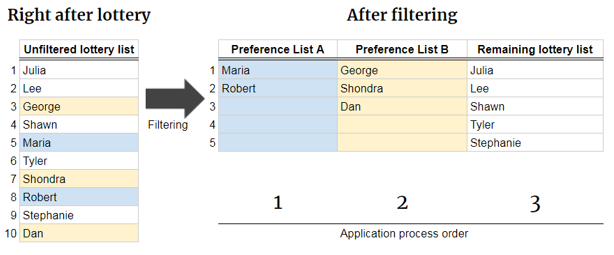
New affordable housing listings are posted weekly, each with its own application deadline. Creating an account to enter these raffles is completely free and open to anyone. There are four different preference programs that can be applied towards an application to “get a better chance at housing”. These special categories prioritize displaced tenants, employees of the San Francisco Unified School District, and those who already live or work within the city limits of San Francisco.. If you qualify for one of these categories, you are moved to the top of the lottery list for that specific property, dramatically increasing your chances of being selected.

Figure 1. Mayor's Office of Housing and Community Development process of filtering the lottery based on applicant’s preference programs.7

Screenshot of Mayor's Office of Housing and Community Development

Step 3: Prepare Your Documents

The leasing process is often lengthy because it can take reviewing around ten applicants to find one who fully meets all the housing criteria.8 Due to this long process to find the right fit for each tenant, those who score lower on the lottery shouldn’t lose hope too quickly as they may find themself moving up if others do not meet the building’s specific requirements.


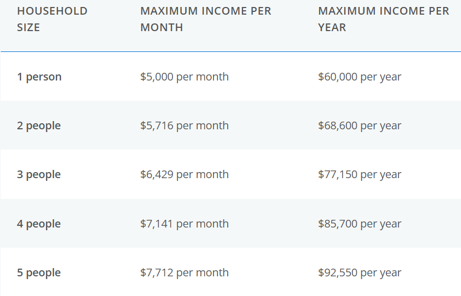
To qualify, applicants must meet specific income limits determined by each listing for their household size, pass a credit and background check, and provide documentation including tax returns, pay stubs, and bank statements. Applicants must pass a credit and background check. This means you cannot have any negative marks like recently declared bankruptcies or unpaid bills that are over 90 days late. If your credit score is 620 or higher, you pass the credit check. If your score falls below this, you can still qualify if you have someone with good credit co-sign the lease, called a "guarantor." This person must live in California and earn at least three times the rent. They promise to pay the rent if you can't. The good news is, if you pay your rent on time for a full year, the guarantor is no longer needed when you renew your lease.


The process as a whole may sound lengthy, but with the support of the housing counselors, it is possible to be another success story.

Figure 2. Household maximum income for applicants.10

Household maximum income for applicants.

Step 4: Be Patient & Persistent After Applying

Between 2016 and 2020, there have been 265 raffles and over 1,700 people winning the Affordable Housing Lottery.10 Let that number be your motivation to get your documents organized, apply persistently, and utilize the available resources to support your entry. Your lottery number could be the next one called!


References

1. Mayor's Office of Housing and Community Development. (n.d.-a). After the rental housing lottery . SF.Gov. Retrieved October 10, 2025, from https://www.sf.gov/after-rental-housing-lottery

2. Mayor's Office of Housing and Community Development. (n.d.-b). DAHLIA San Francisco Housing Portal . Retrieved October 10, 2025, from https://housing.sfgov.org/

3. Mayor's Office of Housing and Community Development. (n.d.-c). Document checklist . DAHLIA San Francisco Housing Portal. Retrieved October 10, 2025, from https://housing.sfgov.org/document-checklist

4. Mayor's Office of Housing and Community Development. (n.d.-d). Eligibility for MOHCD housing programs . SF.Gov. Retrieved October 10, 2025, from https://www.sf.gov/eligibility-mohcd-housing-programs

5. Mayor's Office of Housing and Community Development. (n.d.-e). Get assistance . DAHLIA San Francisco Housing Portal. Retrieved October 10, 2025, from https://housing.sfgov.org/get-assistance

6. Mayor's Office of Housing and Community Development. (n.d.-f). Get priority for the housing lottery . SF.Gov. Retrieved October 10, 2025, from https://www.sf.gov/get-priority-housing-lottery

7. Mayor's Office of Housing and Community Development. (n.d.-g). Information - how the affordable housing lottery works . SF.Gov. Retrieved October 10, 2025, from https://www.sf.gov/information--how-affordable-housing-lottery-works

8. Mayor's Office of Housing and Community Development. (n.d.-h). Information - learn how MOHCD runs affordable housing lotteries . SF.Gov. Retrieved October 10, 2025, from https://www.sf.gov/information--learn-how-mohcd-runs-affordable-housing…

9. Mayor's Office of Housing and Community Development. (n.d.-i). Step-by-step: Understand the rental process . SF.Gov. Retrieved October 10, 2025, from https://www.sf.gov/step-by-step--understand-rental-process

10. Mayor's Office of Housing and Community Community Development. (2021, June 9). How to apply for affordable rental housing in San Francisco. YouTube. https://www.youtube.com/watch?v=vowNa9A6x_4&t=390s

How Zoning Laws Affect Both Grocery Deserts and Housing Scarcity

Outdated Zoning Laws are a primary cause for grocery deserts and housing scarcity. Read this article to learn more about how restrictive land uses led to a scarcity in affordable and accessible housing as an outcome.


What are Zoning Laws? - Zoning in a Nutshell

Zoning is the process by which cities determine appropriate land uses, deciding what type of structures can be built on designated properties, the general use of the buildings, and limit the size, shape, and scale of establishments.


Grocery deserts and housing scarcity are a direct result of zoning laws, which were created to enforce separation of land uses and limit development density. Ultimately preventing communities, most prominently communities of color, and lower-income folks, to access affordable and easily accessible food and shelter.


Grocery Deserts - Zoning’s Unintentional / Intentional Creation

In present-day world, the cost of food continues to increase, leaving individuals constantly tailoring their budgets to keep up with the flow of growing living costs. Food security is a significant social issue across the nation, prominent within communities of color and low-income households, that plays a significant role on individuals mental health and physical well-being.


Ever thought of growing your own produce in your yard to save money on groceries? Ever wished you had a community garden where you could access vegetables and food staples? What if I told you zoning laws prohibit growing your own produce? Many zoning laws make it incredibly challenging to grow food within city limits. Throughout decades, restrictions have been lifted, and permits have been allowed, but there are still regions in the nation that continue to face harsh restrictions.


In suburban communities, there are regulations that command homeowners to leave their front yards as ornamental, keeping their yards looking tidy and aesthetic, leaving no room for harvesting produce. Despite the perception of abundance, residents living in suburbs face food insecurities just like the many residents in rural and urban regions in the nation do. However, here in San Francisco, zoning laws generally allow for residents to grow their own produce in their yard as long as residents follow restrictions like heights or sidewalk interference.


On our campus, grocery stores, libraries, coffee shops, and shopping outlets are all within walking distance. Now, if you were to step off campus, observe and notice the endless parking structures, industrial establishments, and place yourself in a local home within those types of regions, you must acknowledge the fact that you would need a vehicle or utilize public transit to access fresh produce. This is a direct result of zoning laws.


Zoning laws were created in the earlier 20th century, to control urban growth and land uses. When first establishing zoning laws that was the intention, they later became grounds for racial segregation and class exclusion. These zoning laws established that lower-income communities, and communities of color, would be surrounded by small convenient stores, rather than grocery stores full of whole, healthy foods, by the usage of mechanisms like expulsive or exclusionary zoning, and redlining. Ultimately, making land investors believe that implementing establishments like chains of supermarkets in lower-income neighborhoods was hazardous and a waste since people of color were predominantly lower-income, and wouldn’t be able to afford whole foods. In all, the nation limited building corner grocery stores in an effort to prevent the development and progression of low-income neighborhoods. ⁷ ⁸


This created a lasting effect that exists today, where folks rely on local convenient stores for food access which led to poor health outcomes. Birthing economic barriers where individuals in low-income communities find it more expensive to purchase whole, healthy foods, gravitating to unhealthy foods which are more inexpensive in comparison, causing continuous systemic barriers thanks to zoning laws. ¹


Resolving Food Crisis

A few solutions to implement into the well-being of communities, is to permit urban agriculture for both personal and commercial use, in residential, commercial, and mixed-use zones. Creating a permit or policies for residential food production and harvesting can boost the health states of those who suffer from food security concerns. To add, allowing for small grocery stores and food markets to be developed and operated by community members or residential families in all zones and regions, can lead to healthier, more vibrant, equalized neighborhoods. ²


The Bridge Between Zoning and Housing

In the segment of housing, zoning laws created housing scarcity by artificially limiting the amount and type of housing that can be built. Zoning rules were and are set up where they unintentionally or intentionally exclude lower-income and minority populations. Zoning laws restricted the number of residents per square feet and outlined what relationships the residents in a home could have. In San Francisco, only members of the immediate family one generation out could live together with the exception of live-in servants (San Francisco Planning Code 102.8).

Prohibiting multigenerational households, which were common among low-income folks and immigrants. Zoning laws systematically prioritized property values and higher-class neighborhoods over state and regional wide needs for housing affordability. This means that cities cared more about eliminating white and non-white association, ensuring a border between communities and class, than prioritizing housing accessibility to folks of all communities. ⁸


For example, the most prominent zoning law is the traditional single-family structure where properties can only strictly build single-family homes, reducing the supply of land that is available for new housing structures.³ These traditional zoning practices can inhibit the ability of low-income families to live in resource-rich neighborhoods, affecting folks' abilities to quality education, public services, and proximity to employment. Creating a form of exclusionary zoning, which contributes to socioeconomic divisions, inflating housing prices, decreasing access to affordability. ⁴


Acknowledging housing as a nationwide right, is needed to intervene and address the legal barriers and systemic inequalities that exist today, that continue to affect many individuals all over the nation.


Take on Housing Scarcity

In order to decrease the nation's housing shortage, communities should advocate for the state government to use their power and legal authority to intercept local policies and laws that restrict housing development. Reform begins with stronger policies the state needs to override, in order to eliminate exclusionary zoning practices and increase housing supply.


In California, Senate Bill 79, signed by Gavin Newsom preempts local zoning regulations to permit increased housing density near transit hubs. State officials and proponents assert that in focusing new development in well-connected areas, the legislation will create more homes and lower costs, making progress in tackling root causes of California housing scarcity and affordability crisis. ⁶


In Daly City, when you need a break from noise, you can take a walk around Lake Merced, enjoy the beautiful scenery and the sound of the leaves on the trees rustling against each other. Whereas in Bayview, you can take a walk to Heron’s Head Park, surrounded by industrial plants, with visible and audible pollution, surrounded by hazardous material and chemicals in the atmosphere. The key difference is that you will never cross a street in Daly City and suddenly be surrounded by manufacturing, industrial factories. Whereas, in Bayview there is no transition

from residential to industrial. A home is placed five feet away from a concrete supply factory. A direct result of zoning laws.


To conclude, zoning laws directly create and contribute to both grocery deserts and housing scarcity by enforcing separation of land uses and limiting development density. Separating residential areas from commercial ones creates cycles that suppress food and housing access.


References

1. Sustainability Directory. How Does Zoning Affect Food Affordability? Lifestyle Sustainability Directory. September 13, 2025 https://lifestyle.sustainability-directory.com/question/how-does-zoning…

2. Hervey G. American Planning Association, 4 Zoning Changes That Boost Food Security. Planning. August 5, 2021. https://www.planning.org/planning/2021/summer/4-zoning-changes-that-boo…

3. Addressing Challenges to Affordable Housing in Land Use Law. Harvard Law Review. February 2022. https://harvardlawreview.org/print/vol-135/addressing-challenges-to-aff…

4. Hanley A. Rethinking Zoning to Increase Affordable Housing. J. Hous Community Dev. December 22, 2023. https://www.nahro.org/journal_article/rethinking-zoning-to-increase-aff…

5. Min L. Faxi Y. Historical Redlining and Food Environments: A Study of 102 Urban Areas in the United States. ScienceDirect. March 21, 2022. https://www.sciencedirect.com/science/article/abs/pii/S1353829222000363

6. California State Senate. Governor Newsom Signs Senator Wiener's Landmark Law to Build More Homes Near Public Transit. Senate District 11 website. October 10, 2025. https://sd11.senate.ca.gov/news/governor-newsom-signs-senator-wieners-l….